Vorsprung durch Technik – Durango DEX410
Middle
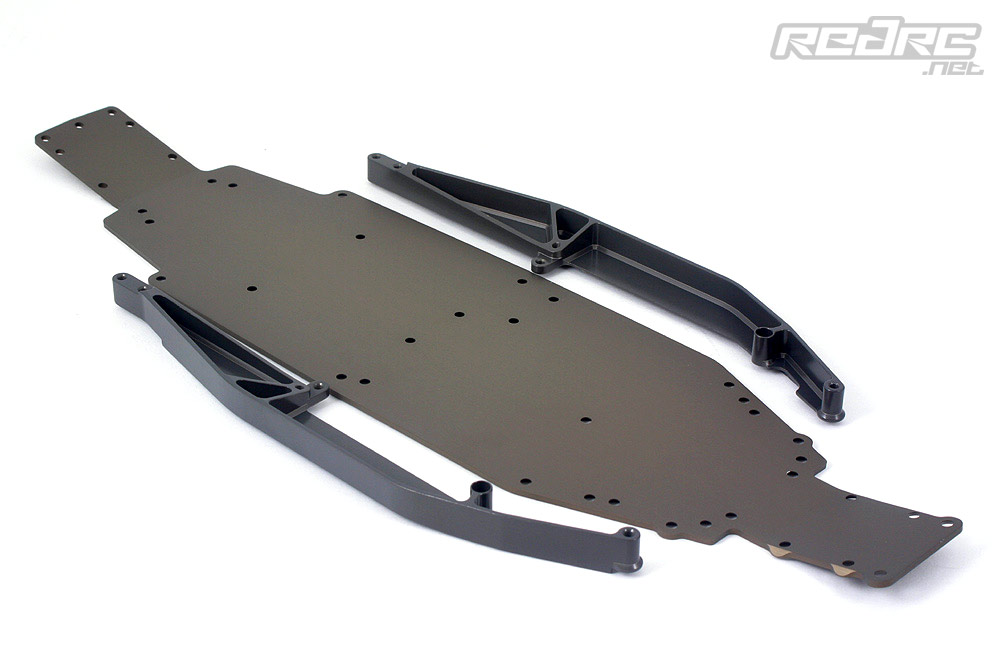
The chassis is made out of 2 mm aluminium and is hard coated for maximum durability. Those who know the legendary and very rare Durango prototypes will remember that these buggies are equipped with the slimmest chassis plate ever seen on a 1/10 scale 4WD buggy. Gerd’s cars always looked crammed with electronic equipment like servo, receiver and speedo. The larger brushless speedos added to the problem of having only a limited amount of space and talking to Michael Vollmer, who took care of actually drawing the DEX410, it was one of the toughest tasks in designing the buggy to maintain the slim chassis design but also to allow for maximum possible space for electronics. Secondly the plan was to preserve the ‘milled out’ look of the Durango prototypes that sported a milled chassis from a single piece of alloy! This now was achieved by using alloy rails that are screwed to the sides of the chassis plate. They not only add that technical look but also make for a very strong chassis with the right amount of torsional flex to make for the correct balance between strength and flexibility.
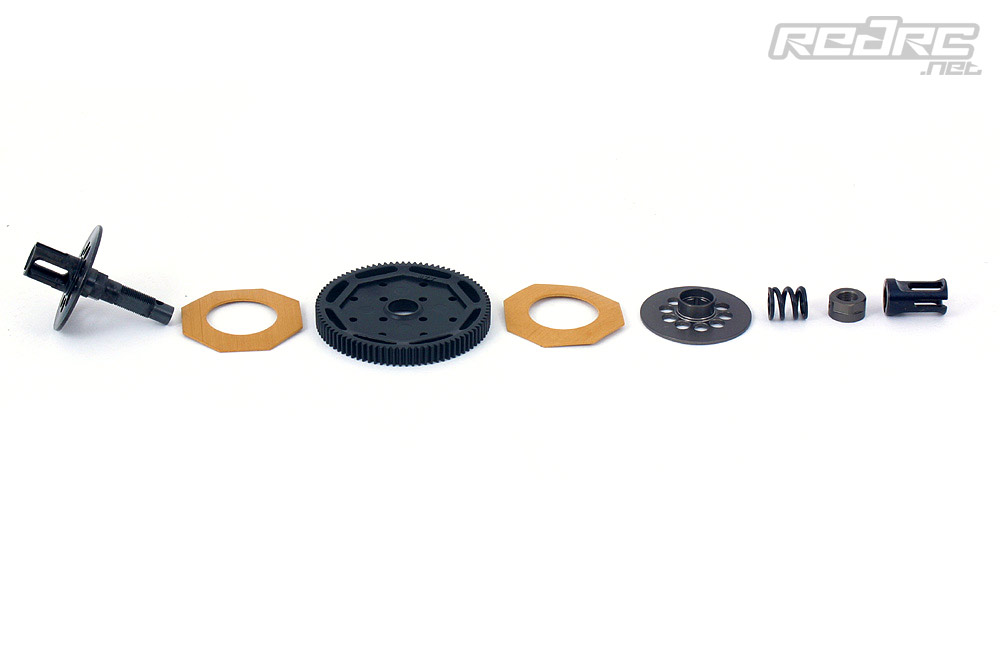
The most characteristic feature of the Durango prototype was definitely the quick release mid-ship mounted slipper clutch assembly. It was of ‘quick release’ style because it had to be separated from the car each time the drivers wanted to change the rear mounted battery. The battery pack was mounted so close to the centre line of the chassis to achieve the slimmest chassis lines possible. Before the first DEX410 prototypes where seen on the internet there was much rumour if the quick release slipper will be a feature even on the production car and yes, it is! Of course there would have been a couple of other ways to make a battery change possible without removing the slipper from the car but Gerd Strenge, father of the Durango, wanted this unique feature to be part of the production buggy. The design of the dual pad slipper does not differ so much from other designs out there with the exception of venting holes in the pressure plates to keep the pads as cool and consistent as possible. Unlike other buggies, and because of the gear differentials, the drivetrain only slips within the slipper clutch making it the possibly hardest stressed part in the whole drivetrain.
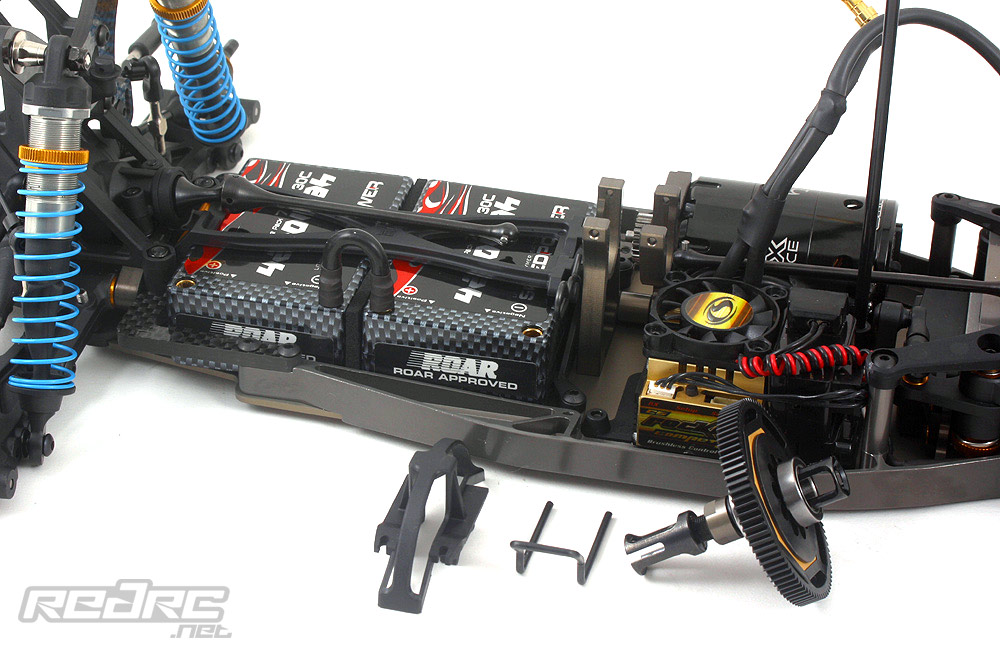
On the original Durango the slipper clutch was fixed by two thin epoxy straps secured by four screws. To make the quick release even quicker the Team Durango designer Michael Vollmer got rid of the straps and the screws by designing a clever plastic cage that not only holds the slipper in place but also acts as a cover for the spur gear to prevent the speedo wires to get in contact with the rotating gear. The plastic cage is secured by a U-shaped wire which means you only have to detach the clamp and the cage to access the slipper clutch. Very trick.
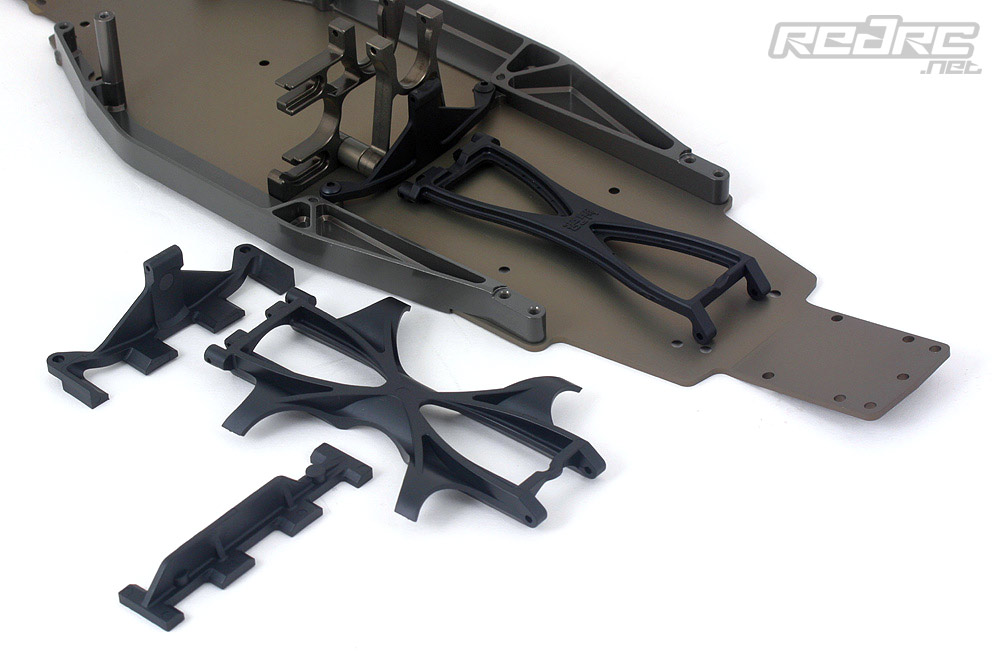
Just behind the slipper assembly the battery compartment is located. It is designed to accommodate saddle-pack style Sub-C and LiPo batteries that sit side-by-side. The kit includes all parts to either use the car with NiMH or LiPo packs and we choose to build our car for the use of LiPo of course. The main difference between the LiPo and the NiMH car is the upper brace and the front brace. While the NiMH fastener offers separators for each cell in combination with an ‘alien-like’ appearance, the LiPo brackets make for a very clean looking car. Like the slipper cage the battery brace is secured by a clip from thick wire for battery changes without additional tools.